When it comes to apartment fire safety, bedrooms are among the most commonly overlooked areas. People think that bedrooms are always safe, so they put fire alarms in the kitchens and drawing rooms.
Meanwhile, they forget that this is one of the most important areas that needs to be safe at all times.
That’s because it is the space where you relax & sleep. Not only that, when someone relaxes in the bedroom, they also prefer to charge their devices and use heaters during winter.
So, they often spend long hours without thinking about potential fire hazards.
Unfortunately, bedrooms are also one of the most overlooked areas when it comes to apartment fire safety.
Many apartment fires become deadly because they start at night when people are asleep. A faulty charger, portable heater, or other equipment can quickly turn a peaceful bedroom into a dangerous situation within minutes.
Why Bedroom Fire Safety Matters in Apartments?
Most renters focus heavily on kitchen fire safety but ignore bedroom risks. However, bedrooms contain several common fire hazards, including:
- Charging electronics
- Extension cords
- Electric blankets
- Portable heaters
- Candles
- Smoking materials
- Bedding and curtains
- Overloaded outlets
The biggest concern is that fires occurring during sleep are often more dangerous because people react slowly when alarms activate at night.
In apartment buildings, smoke and flames can also spread rapidly through halls and corridors. That means even a small bedroom fire can threaten multiple apartments. Understanding bedroom fire prevention is one of the smartest safety investments renters can make.
Common Causes of Bedroom Fires in Apartments
Before discussing prevention tips, it is important to understand what usually causes bedroom fires.
Electrical Overloads:
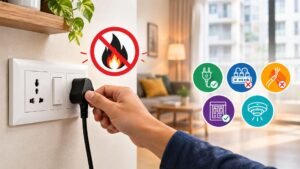
Electrical heating is one of the most common reasons behind bedroom fire ignition. Modern bedrooms contain multiple electronic devices like- TV, Air conditioner etc. Many renters overload outlets and power strips without realizing the danger.
They usually overload the outlets by plugging too much equipment into one socket. Besides this, they also prefer to use cheap power extension cords or wiring. This can cause a short circuit due to heavy load.
According to an NFPA report, approximately 32,620 apartments in the U.S. catch fire annually due to electrical causes, of which 5,360 cases were found to have resulted from electrical short circuits occurring in bedrooms.
So make sure that you are not repeating one of the following mistakes.
- Plugging too many devices into one outlet
- Using cheap extension cords
- Charging devices overnight under pillows
- Ignoring damaged wires
- Using old adapters
Space Heaters:
Portable heaters are convenient during winter, but they can become serious fire hazards. Often when we use portable heaters in winter, we make one of these mistakes.
- Keeping heaters near curtains
- Placing heaters close to beds
- Leaving heaters on while sleeping
- Using extension cords with heaters
- Using outdated heating devices
Space heaters can ignite bedding, carpets, clothing, or furniture very quickly.
Smoking in Bed
Smoking-related fires remain one of the deadliest causes of residential fires. A burning cigarette can easily ignite:
- Mattresses
- Blankets
- Pillows
- Upholstered furniture
Many fatal bedroom fires happen because occupants fall asleep while smoking.
Candles and Decorative Lighting
Candles create a relaxing atmosphere, but unattended flames are extremely risky inside bedrooms.
Common candle fire risks:
- Curtains touching flames
- Candles tipping over
- Falling asleep with candles lit
- Decorative lights overheating
Even small decorative lighting setups can overheat if used improperly.
Electric Blankets and Heated Bedding
Electric blankets provide comfort during colder months, but damaged or low-quality products increase fire risks.
Unsafe practices include:
- Folding electric blankets tightly
- Sleeping with damaged blankets
- Using old heating pads
- Leaving heated blankets plugged in all day
Heat buildup inside bedding materials can trigger fires.
Essential Bedroom Fire Safety Tips for Apartment Renters:
Now let’s discuss the most important ways to improve bedroom fire safety inside apartments.
Avoid Overloading Electrical Outlets
One of the simplest fire prevention steps is proper outlet management. To do that, you need to adopt smart electrical safety habits like:
- Use certified surge protectors.
- Avoid plugging multiple high-power devices together.
- Inspect outlets regularly
- Replace damaged chargers immediately.
- Unplug devices when not in use.
If outlets feel hot or emit burning smells, contact apartment management immediately. You should never ignore electrical warning signs.
Keep Chargers Away from Beds and Pillows
Many people charge phones directly on beds while sleeping. Also, they leave it plugged in overnight. This can lead to a fire risk in the bedroom. Why am I saying that it is dangerous?
- Heat becomes trapped under blankets.
- Poor ventilation increases overheating.
- Damaged batteries may ignite.
To avoid this fire danger in bedrooms, you need to implement these safer charging practices:
- Charge devices on hard surfaces
- Avoid charging under pillows.
- Use original charging accessories.
- Disconnect chargers after full charging
A simple charging habit can significantly reduce bedroom fire risks. So make sure that you are using them every day.
Install and Test Smoke Alarms
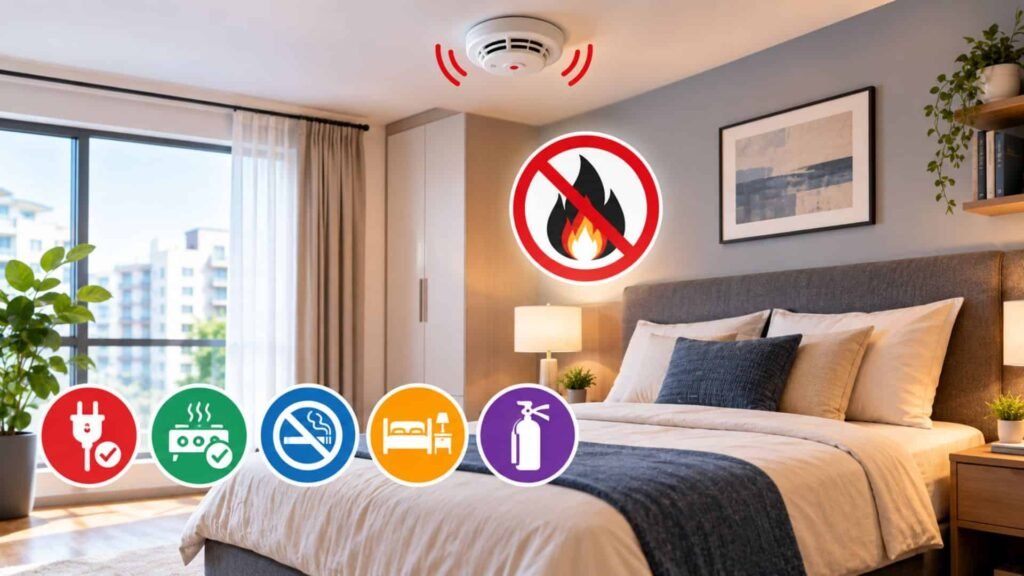
Smoke alarms are critical for nighttime fire detection. Every apartment bedroom should ideally have:
- A working smoke detector nearby
- Fresh batteries
- Monthly testing
Important smoke alarm tips:
- Test alarms once every month
- Replace batteries twice yearly.
- Report faulty detectors quickly
- Never disable smoke alarms.
Smoke detectors save lives by providing early warning during sleep.
Avoid Using Candles in Bedrooms
Candles remain one of the most preventable fire hazards. So you should mostly avoid them in your bedroom. But if you really want to decorate your room for a special moment, you can use better alternatives like-
- LED candles
- Battery-operated lamps
- Smart ambient lighting
However, if you do not like these alternatives, you can use real candles but keep the following things in mind.
- Never leave them unattended.
- Keep them away from fabrics.
- Extinguish before sleeping
Bedrooms contain multiple flammable materials, making open flames especially dangerous.
Keep Escape Paths Clear
When there is an emergency, every second matters. That’s why you should always keep the exit/ escape paths clear. To do that, you need to ensure the following things.
- Bedroom doors open easily.
- Windows are accessible
- Walkways remain uncluttered
- Furniture does not block exits.
During smoke-filled conditions, clutter can slow evacuation and increase injury risks.
Conclusion-
By following proper electrical safety practices and maintaining working smoke alarms, apartment renters can create a significantly safer sleeping environment.
Fire safety is not about fear. It is about preparation, awareness, and building habits that protect your life, loved ones, and home every single day.